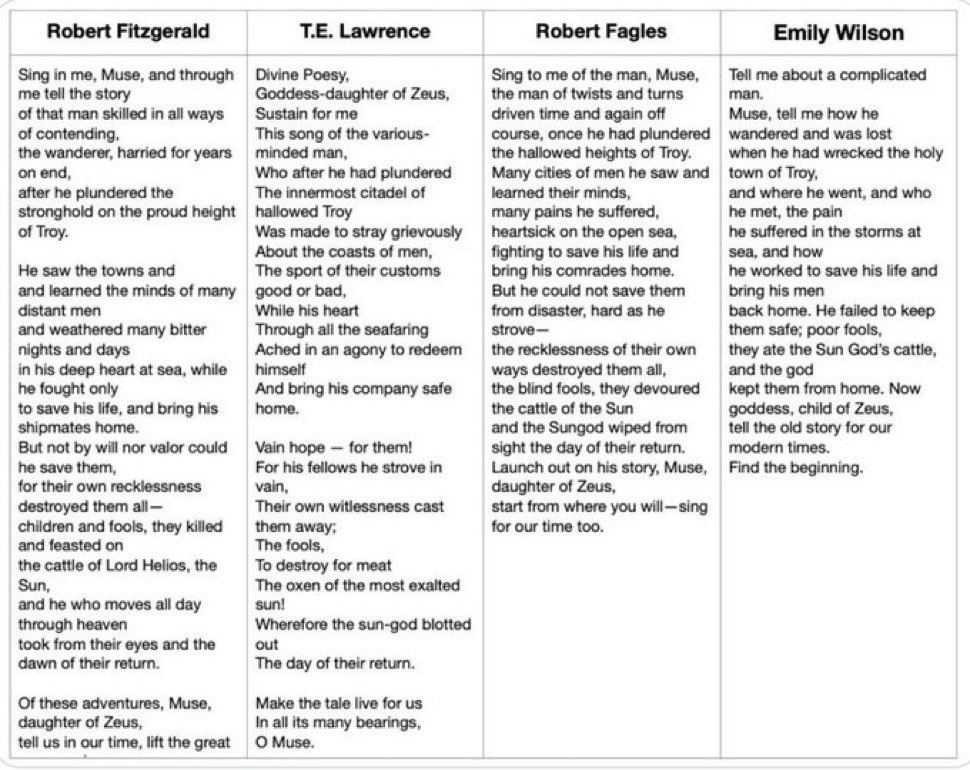
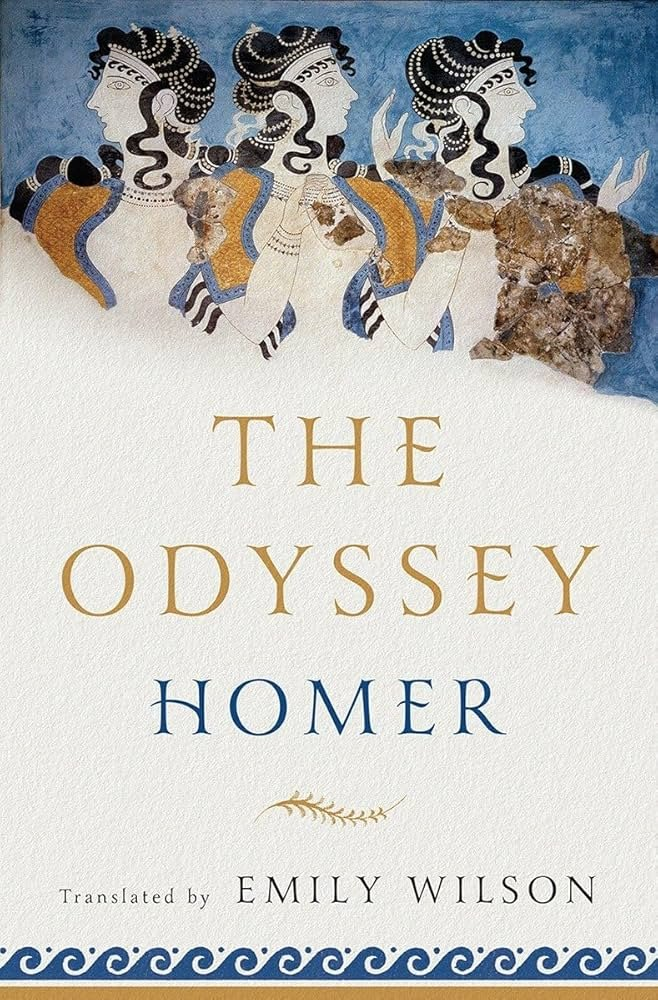
Emily Wilson, the first woman to translate the Odyssey into English, is as concerned with these surrounding characters as she is with Odysseus himself. Written in plain, contemporary language and released earlier this month to much fanfare, her translation lays bare some of the inequalities between characters that other translations have elided. It offers not just a new version of the poem, but a new way of thinking about it in the context of gender and power relationships today. As Wilson puts it, “the question of who matters is actually central to what the text is about.”
Why it matters for a woman to translate the Odyssey
Composed around the 8th century BC, the Odyssey is one of the oldest works of literature typically read by an American audience; for comparison, it’s almost 2,000 years older than Beowulf. While the Iliad tells the story of the Trojan War, the Odyssey picks up after the war is over, when Odysseus, the king of Ithaca, is trying to make his way home.
As a woman, Wilson believes she comes to the Odyssey with a different perspective than translators who have gone before her. “Female translators often stand at a critical distance when approaching authors who are not only male, but also deeply embedded in a canon that has for many centuries been imagined as belonging to men.” She called translating Homer as a woman an experience of “intimate alienation.”
But small details can tell us something about even the most frustrating of characters. At one point in Book 21, Penelope unlocks the storeroom where Odysseus keeps his weapons — as Wilson writes in her translator’s note, this act sets in motion the slaughter of the suitors and the resolution of the poem. As she picks up the key, Homer describes her hand as pachus, or “thick.” “There is a problem here,” Wilson writes, “since in our culture, women are not supposed to have big, thick, or fat hands.” Translators have usually solved the problem by skipping the adjective, or putting in something more traditional — Fagles mentions Penelope’s “steady hand.” Wilson, however, renders the moment this way: “Her muscular, firm hand/ picked up the ivory handle of the key.”
“Weaving does in fact make a person’s hands more muscular,” she writes. “I wanted to ensure that my translation, like the original, underlines Penelope’s physical competence, which marks her as a character who plays a crucial part in the action — whether or not she knows what she is doing.”
Wilson’s translation, then, is not a feminist version of the Odyssey. It is a version of the Odyssey that lays bare the morals of its time and place, and invites us to consider how different they are from our own, and how similar.
https://www.vox.com/identities/2017/11/20/16651634/odyssey-emily-wilson-translation-first-woman-english