
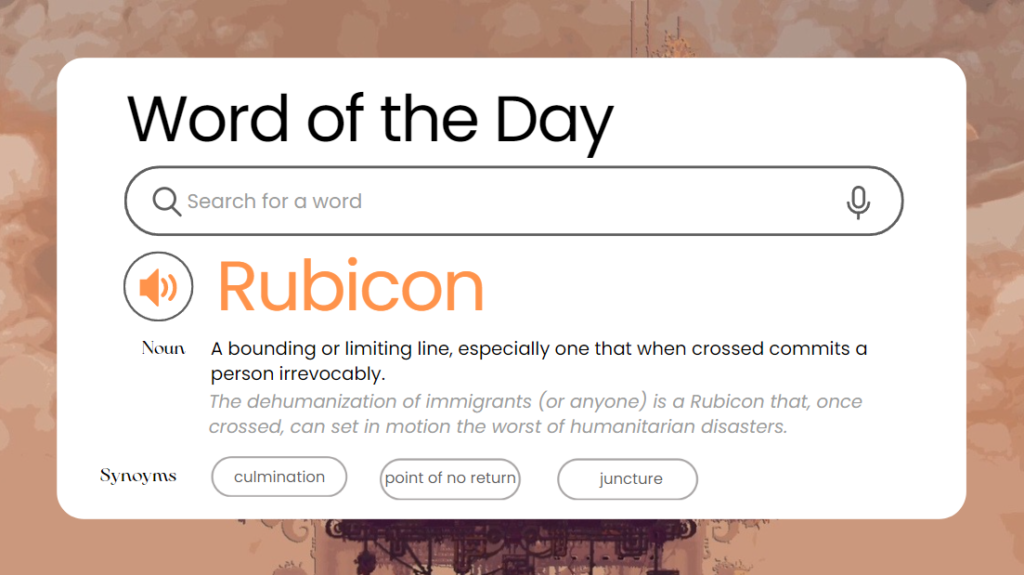
Our Word of the Day is “Rubicon.”
Let us know that you read today’s Word of the Day post and that you liked it by sharing what do you think might be considered a Rubicon.
Stay tuned for our next Word of the Day!
Did you know?
In 49 B.C., Julius Caesar led his army to the banks of the Rubicon, a small river that marked the boundary between Italy and Gaul. Caesar knew Roman law forbade a general from leading his army out of the province to which he was assigned. By crossing the Rubicon, he would violate that law. “The die is cast,” he said, wading in. That act of defiance sparked a three-year civil war that ultimately left Julius Caesar the undisputed ruler of the Roman world. It also inspired English speakers to adopt two popular sayings –crossing the Rubicon and the die is cast-centuries later. Rubicon has been used in English as the name of a significant figurative boundary since at least the early 1600s.
Entiendo que se ha utilizado metafóricamente para referirse a la toma de una decisión irreversible, que marca un punto de no retorno o un momento decisivo en una situación, a menudo con consecuencias significativas. Según el diccionario de collins: “If you say that someone has crossed the Rubicon, you mean that they have reached a point where they cannot change a decision or course of action”.
Ejemplos:
1. By accepting the job offer in a different country, she felt like she was crossing the Rubicon in her career, leaving behind her old life for new opportunities.
2. After confessing his love to his best friend, he realized he was crossing the Rubicon in their relationship, unsure of what the future held.
Y lo genial es que la palabra se usa como un nombre propio, en mayuscula.
Yo no sé si la he escuchado en español, la verdad. :think:
¡Que interesante, Andre! Su uso es bastante específico, entonces.